Mexican President Denies Agreement with DEA on ‘Project Portero’ Anti-Cartel Initiative
President Claudia Sheinbaum publicly refuted the U.S. agency's announcement of a "major new initiative," stating "there is no agreement" and underscoring a sharp disconnect in bilateral security communication.

Key Takeaways
-
Public Denial: Mexican President Claudia Sheinbaum forcefully denied that her government has any formal agreement with the U.S. Drug Enforcement Administration (DEA) for a new anti-cartel operation.
-
The Disputed Initiative: The denial came just one day after the DEA announced “Project Portero,” hailing it as a “flagship operation” to combat cross-border smuggling of drugs, guns, and money.
-
Lack of Coordination: Sheinbaum expressed frustration over the DEA’s unilateral announcement, stating her administration was not consulted and that such statements must follow proper diplomatic protocols.
-
A Rift in Improving Relations: The public disagreement marks a surprising point of friction after a period of seemingly improving security cooperation, which had included the recent extradition of 26 cartel figures to the U.S.
-
Mexico’s Stance: The President reiterated that Mexico only signs agreements with the U.S. government as a whole, not individual agencies, and any cooperation must be based on sovereignty, mutual trust, and respect.
Mexico City Rebukes DEA Over Anti-Cartel Operation Announcement
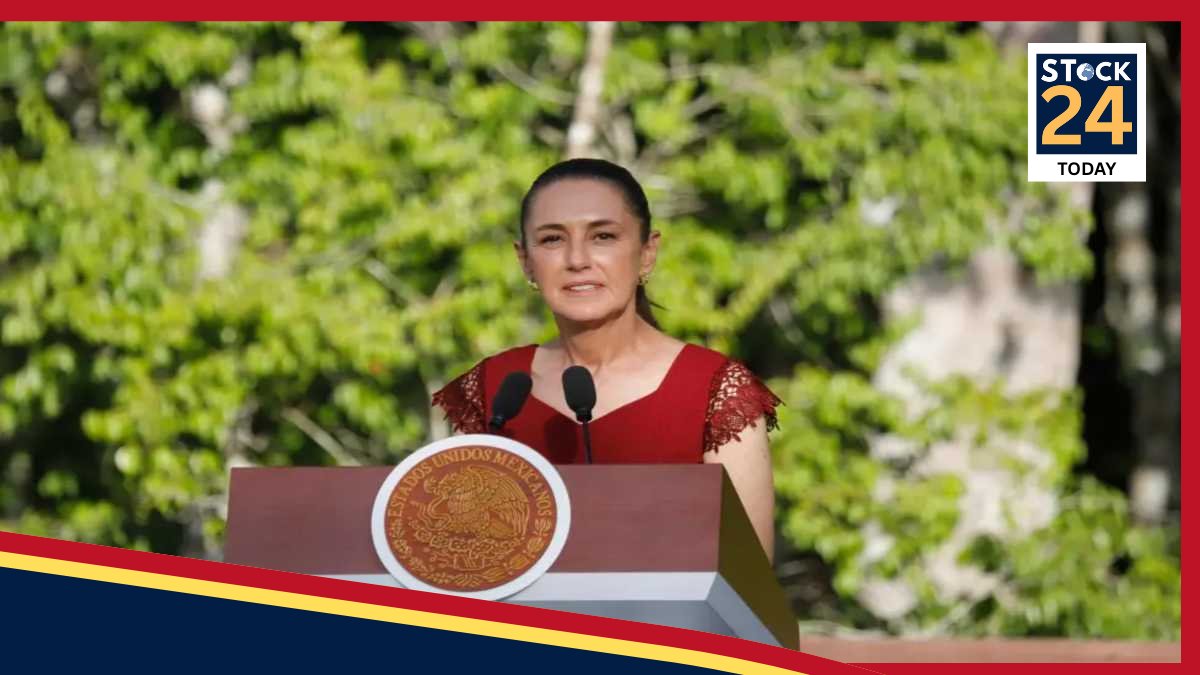
In a pointed public statement on Tuesday, Mexican President Claudia Sheinbaum flatly denied the existence of a new collaborative anti-cartel initiative with the U.S. Drug Enforcement Administration, creating a significant and public rift just one day after the U.S. agency had enthusiastically announced the plan.
The controversy centers on “Project Portero,” which the DEA unveiled on Monday as a “major new initiative” and a “flagship operation” aimed at dismantling smuggling routes used by drug cartels along the U.S.-Mexico border.
Speaking at her daily morning news briefing, President Sheinbaum directly contradicted the DEA’s statement. “The DEA put out a statement yesterday saying that there is an agreement with the Mexican government for an operation called Portero,” she said. “There is no agreement with the DEA. The DEA puts out this statement, based on what we don’t know. We have not reached any agreement, none of the security institutions (have) with the DEA.”
The U.S. embassy in Mexico and the DEA did not immediately respond to requests for comment on the President’s remarks.
A Dispute Over Communication and Sovereignty
According to Sheinbaum, the only recent collaboration remotely related to the DEA’s announcement was a workshop in Texas attended by four members of Mexico’s police force. The DEA’s original statement had mentioned this workshop, noting it was designed to train Mexican investigators alongside U.S. law enforcement, defense officials, and intelligence personnel.
The President, described as visibly annoyed, appeared to be most frustrated by the lack of coordination from the U.S. agency. Her comments came just days after a series of positive developments in the U.S.-Mexico relationship, including an extension to avoid U.S. tariffs and the high-profile extradition of 26 cartel figures from Mexico to the United States.
Sheinbaum’s administration had been seen as taking a more aggressive stance against cartels and repairing a security relationship that had grown tense under her predecessor, Andrés Manuel López Obrador. The previous administration had placed restrictions on DEA agents operating in Mexico and publicly clashed with the agency.
The core of Sheinbaum’s objection seemed to be procedural and diplomatic. She emphasized that her administration has been working for months on a broader security framework with the U.S. government, which she said was nearly finalized. That comprehensive agreement, she noted, is built on four key principles: sovereignty, mutual trust, territorial respect, and coordination without subordination.
Sheinbaum called on the DEA to respect Mexico and adhere to agreed-upon protocols for such announcements, stressing that her country forges pacts with the U.S. government, not its individual agencies.
The DEA’s Monday statement had included a quote from its administrator, Terry Cole, which highlighted the disconnect. “Project Portero and this new training program show how we will fight — by planning and operating side by side with our Mexican partners, and by bringing the full strength of the U.S. government to bear,” Cole had said.
President Sheinbaum’s public refutation now casts a shadow over that stated goal of operating “side by side.”