Trump Hosts Zelenskyy and European Allies in High-Stakes White House Summit to Push for Ukraine Peace
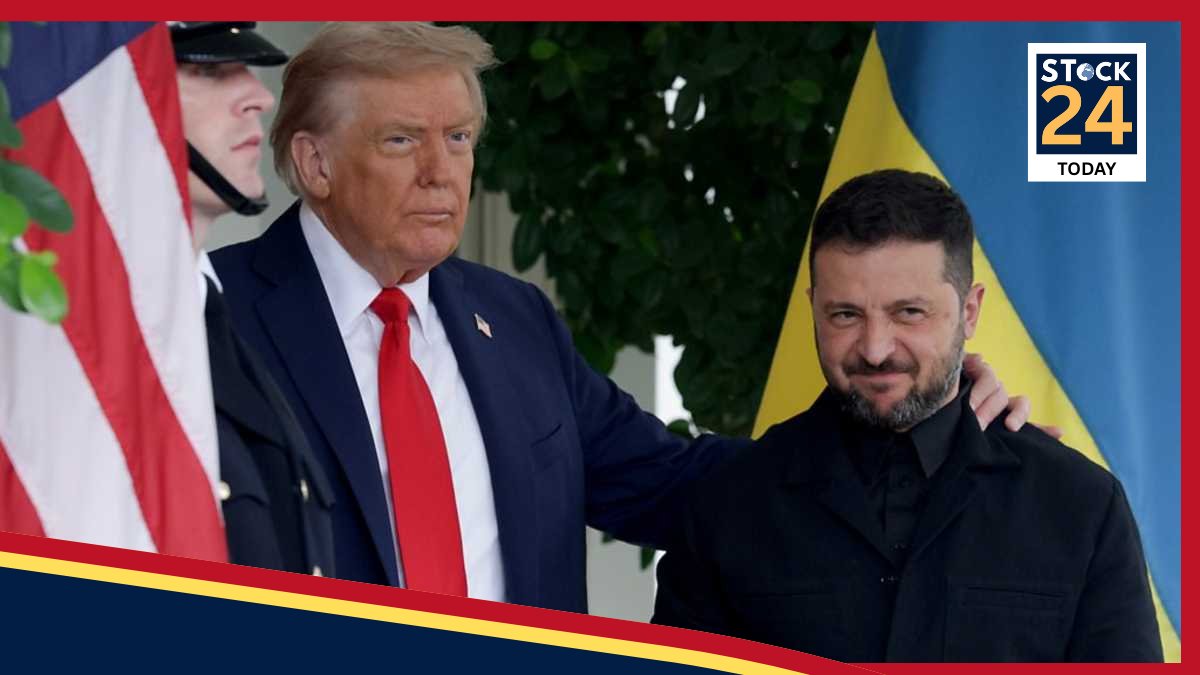
In a powerful and historically rare display of trans-Atlantic unity, seven European leaders joined Ukrainian President Volodymyr Zelenskyy at the White House on Monday for an urgent summit with President Donald Trump. The high-stakes gathering aimed to present a united front and build momentum for a negotiated end to Russia's war in Ukraine, just days after Trump held a lengthy one-on-one meeting with Russian President Vladimir Putin.

Key Takeaways
-
Unprecedented Diplomatic Gathering: Seven top European leaders, including the heads of France, Germany, Italy, the UK, and NATO, flew to Washington on short notice to join President Zelenskyy in a crucial meeting with President Trump.
-
A Push for Peace: The summit’s primary goal is to bolster President Zelenskyy and advance a Trump-brokered peace initiative, positioning the U.S. President as a central figure in resolving the conflict.
-
Context is Key: The meeting comes just after a nearly three-hour discussion between Trump and Putin and follows a previously tense White House visit for Zelenskyy in February, signaling a major diplomatic reset.
-
A Change in Tone: President Zelenskyy adopted a notably more diplomatic approach, swapping his signature military fatigues for a suit and repeatedly thanking Trump and European partners for their support.
-
Historic Urgency: Experts note the remarkable speed with which the summit was arranged, reflecting a “crisis moment” and drawing parallels to pivotal diplomatic moments of the 20th century.
A Show of Forceful Diplomacy
The delegation that assembled in Washington represented the heart of the Western alliance. It included French President Emmanuel Macron, Italian Prime Minister Giorgia Meloni, British Prime Minister Keir Starmer, Finnish President Alexander Stubb, German Chancellor Friedrich Merz, NATO Secretary General Mark Rutte, and European Commission President Ursula von der Leyen.
These leaders pivoted from their own pressing national agendas to rally around Zelenskyy, whose previous White House visit in February was marked by clashes with both Trump and Vice President JD Vance. Monday’s summit was a clear effort to reset that relationship and project solidarity ahead of a potential Trump-brokered meeting between the Ukrainian and Russian presidents.
The urgency was palpable. The leaders arrived in Washington within 48 hours of Trump’s talks with Putin in Alaska. “Every single one of them got on a plane… and flew to the United States of America,” said White House Press Secretary Karoline Leavitt, emphasizing their commitment to “keep momentum toward peace in Ukraine alive.”
Inside the Oval Office: History, Power, and Personality
The central meeting took place in the Oval Office, where photos shared by the White House depicted a scene reminiscent of a corporate boardroom. President Trump sat behind the historic Resolute desk, with President Zelenskyy and the European delegation seated opposite him. Orbiting in the background were key administration figures, including Vice President Vance, Secretary of State Marco Rubio, and Treasury Secretary Scott Bessent.
The gathering merged high-stakes diplomacy with moments of characteristic Trumpian flair. The President reportedly escorted the leaders to what he dubbed the “Monica Lewinsky room,” showing off rows of red campaign hats, and deflected a question about Ukrainian elections by joking about serving a third term himself.
For historical observers, the event stood out. “Washington has often been the scene of these great moments of diplomacy. But it was the speed with which this came together that was so striking and sets this apart,” said Marc Selverstone, director of presidential studies at the University of Virginia’s Miller Center of Public Affairs. “Everyone realized this was a crisis moment.” He drew parallels to Franklin Roosevelt’s 1941 meeting with Winston Churchill and critical Cold War summits that decided the fate of Europe.
A Diplomatic Reset for President Zelenskyy
Monday offered a significant opportunity for President Zelenskyy to mend fences and reframe his relationship with the Trump administration. He arrived in a suit rather than his usual military attire, a visual cue he acknowledged when greeting Trump. “The best I had,” he said. “I love it,” Trump replied in a warm exchange later shared on his Truth Social platform.
Throughout the day, Zelenskyy expressed his gratitude more than a dozen times—for the invitation, for the efforts “to stop killings and stop this war,” and for the support of his European allies.
Vice President Vance, who had publicly clashed with Zelenskyy during their last encounter, also signaled a desire to smooth relations, posting a photo of their handshake online.
The symbolic weight of the summit was further underscored by the presence of Finland’s President Alexander Stubb. He directly referenced his country’s own difficult history with Russia as a potential model for a resolution.
“We, of course, have our own historical experience with Russia from World War II,” Stubb said. “And if I look at the silver lining of where we stand right now, we found a solution in 1944, and I’m sure we’ll be able to find a solution in 2025.”